
On the 20th of May 2026, SpaceX filed their S-1 prospectus.1 This is the required document outlining the details of a business before they are floated on public markets, their initial public offering. By nature, such documents are dense and legalistic; thus, often not entertaining reads.
This prospectus, however, is a body of work that any reader appreciative of the work of Gene Roddenberry – the creator of the fictional universe of Star Trek – would probably enjoy. Exciting ideas and record-breaking numbers do not guarantee a good investment, or the opposite, but they do guarantee the undivided attention of the entire stock market.
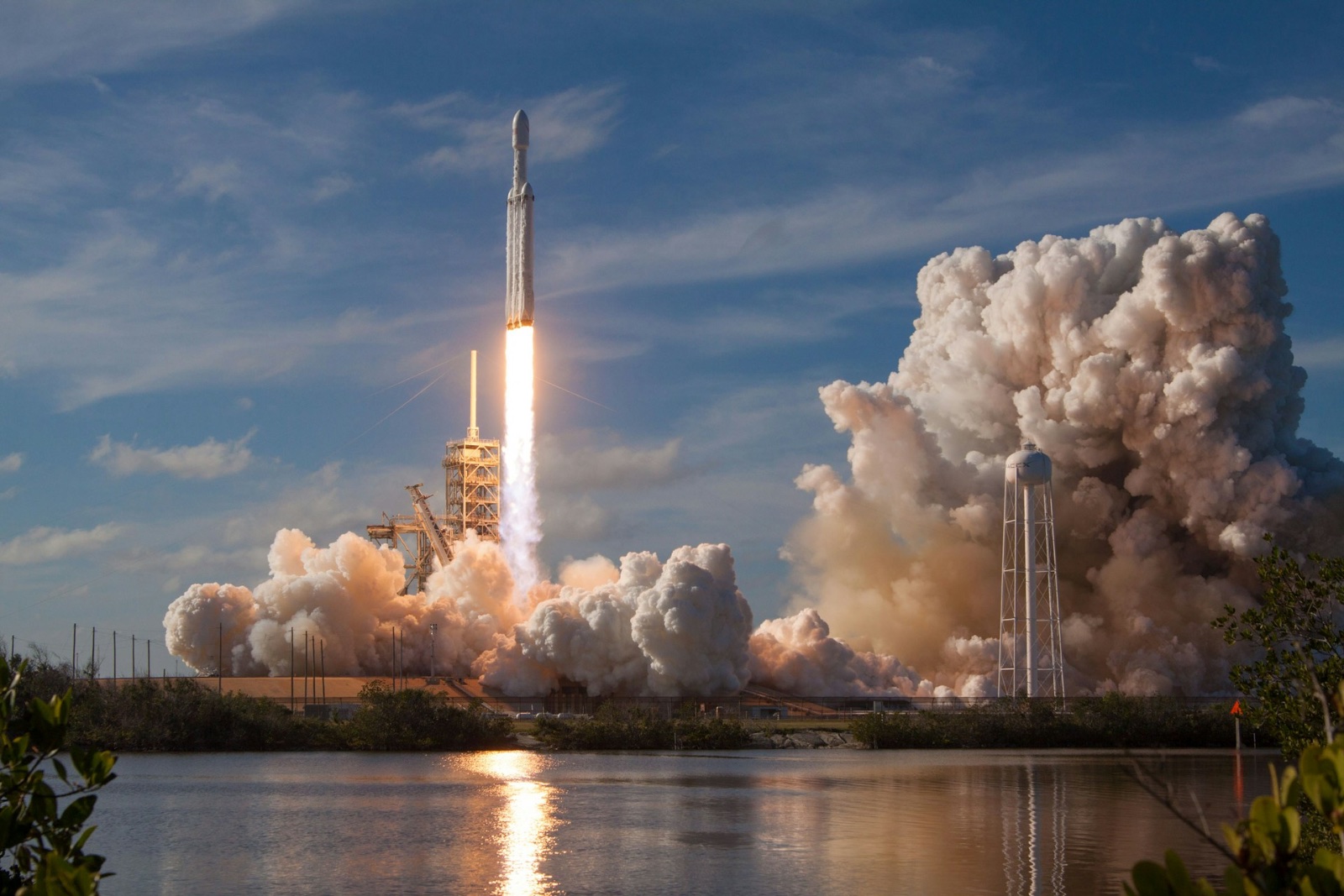
The filing opens with a series of 14 pictures of rockets, which is uncommon for this document-type. The value provided to a potential investor carrying out due diligence is questionable. But they were a welcome surprise, I’m sure, for whomever at the US Securities and Exchange Committee is responsible for reviewing the filing.
“Asteroid mining”; “Space tourism”; “in-orbit manufacturing”; “establish a lunar economy”; these are a few of the ambitious projects that SpaceX claims as their future “growth strategies”. The “strategies” undoubtedly sound impressive and, admittedly, SpaceX does have a ‘first-mover-advantage’ as well as relevant infrastructure and expertise. Those eager to invest would believe that this could create a moat.
On the other hand, some believe these pictures do in fact, as the common adage goes, ‘say 1000 words’. They argue that the investment thesis here might not be the numbers are sound and the idea looks promising, and instead could be: who doesn’t like rockets?
The Business Model
With this IPO, SpaceX intends to convince investors that the business is worth approximately $1.75 trillion dollars. For scale, if you stacked that value up vertically in crisp $100 dollar bills it would reach 1911.35 Km into the air – more than 3 times the altitude at which SpaceX’s own “Starlink” satellites orbit.
The lossmaking SpaceX priced their 555.6 million shares at $135 each. John Foley at the FT highlights that this will rank SpaceX as “the US stock market’s 7th biggest company”, but on a revenue basis “it would be 200th”, right alongside General Mills.2
General Mills being the cereal maker that produces Cheerios; great cereal, not quite NASDAQ 100 material. Trading at over 90x annual revenues, SpaceX is by this measure the dearest company among all its "Big Tech Peers" 3
At the end of their debut trading week, SpaceX shares closed at $160.95 – up 19%, leaving SpaceX at a $2.1 trillion valuation. It is then safe to say that, with due diligence carried out or not, investors are convinced.
Amidst the frantic demand, SpaceX raised $75 billion. This figure could reach their target of $86 billion – a figure over three times bigger than the next biggest IPO in history – if underwriting banks exercise their right to sell additional shares.
SpaceX justifies this valuation by claiming a “total addressable market” worth $28.5 trillion dollars, a value representing more than a fifth of world GDP. SpaceX breaks down their “TAM” (total addressable market) into three key segments: “Space”, “Connectivity” and “AI”.
Space, ‘The Starship Enterprise’
Clearly, as the company’s namesake, the “Space” branch of the business is fundamental to the business. In 2025, this branch made an operating loss of $657 million, and its addressable market is the smallest of the group. However, the importance of their “Space” enterprise with regards to the growth of the other two segments – “Connectivity” and “AI” – cannot be overstated.
The future success of the “Space” arm of the company, and thus SpaceX as a whole, “is dependent on the successful development of Starship at scale”.
Starship is not yet operational, but is “designed to be a fully reusable, super-heavy lift launch vehicle” which will allow for “increased launch payload capacity” and the establishment of the “Lunar economy”. SpaceX discloses that problems with Starship’s development “would delay or impede” their deployment of “next-generation satellites”, expansion of “satellite-to-mobile connectivity services” and construction of “in-orbit AI compute infrastructure”.
Thus, the success of SpaceX, and by extension its value as an investment, depends on the smooth development and deployment of Starship. The odds here seem to be stacked against SpaceX, as previous attempts to tackle the space frontier have seen inconsistent success – a fact all too fresh in the minds of SpaceX employees with the recent failure of Starship’s boosters.
Connectivity
The “Connectivity” segment covers the wide array of applications of Starlink – SpaceX’s satellite constellation. This provision of internet connectivity via non-terrestrial means is expanding “global access to high-speed internet”, “substantially reducing” areas with no mobile connection worldwide along with many other applications for enterprise and governments.
A constellation of satellites providing worldwide internet connection from space sounds no less futuristic than SpaceX’s other business ventures, but possesses a unique trait that is profitability. As the only operation within SpaceX that defies the laws of gravity while abiding by the laws of accounting, within “Connectivity” investors may be able to find a convincing thesis, genuine moat and a promising investment opportunity.
The trouble is that “Connectivity”, like “Space”, only represents a small fraction of SpaceX’s acclaimed total addressable market. Thus, impressive and successful as it may be, it may not have enough propulsion to keep SpaceX’s valuation at such stratospheric heights.
SpaceX claims that firepower lies elsewhere – throwing almost all their chips on to the pile that in recent times investors have become all too familiar with.
AI
The truly key segment here is AI, representing over 90% ($26.5 trillion) of their acclaimed total addressable market.
This is a marked statement that no number of pictures of rockets can refute: if you invest in SpaceX, you are investing in an AI company.
It is once again crucial to state just how efficient of a money furnace SpaceX’s AI-business currently is. In the first 3 months of 2026 alone, it lost the company $2.5 billion dollars.
However, this problem is not unique to SpaceX, it is a characteristic of Large Language Models (LLMs): no matter how large they become, they seem to struggle with one word in particular, profit. On the same quest for capital, the front runners in the AI market, Anthropic and OpenAI, have also announced huge soon-to-happen IPOs.
Consequently, for those looking to invest in SpaceX to diversify investment away from AI companies, this no longer seems like the place to look. And for investors looking to bet on the ‘AI race’, consumer sentiment and data tells us that SpaceX’s AI is by no means the favourite horse; in fact, it is yet to be seen if the race will even pay out any money to the winners.
Like It or Not, We’re All Along for the Ride
As John Foley at the Financial Times also points out, conventional financial modelling is likely out of its depth, or rather ‘out of its altitude’ when trying to value this company.2 After all, how do you discount the cash flows of Lunar and Martian economies, or asteroid mining? He also highlights that “the market has never before had to price a stock so speculative yet so large” supporting the idea that only time can tell where the market will price this IPO.
Investors with high risk-appetites who are fond of SpaceX accepted the G-force and willingly buckled themselves in for launch, demanding over $100 billion in SpaceX stock. 4
But what of those who would rather watch from a safe distance?
Due to another unorthodoxy within this IPO, billions of dollars of passive-investor funds are strapped on to this rocket. SpaceX has been fast tracked into the NASDAQ 100, being permitted entry after 15 trading days, and the FTSE Russell indices after only 5 trading days. Together, this is estimated to “create $8bn of demand from tracker funds within weeks” says Jennifer Hughes at the Financial Times.5
This seems to favour SpaceX and the banks moving the shares, however its impact on investors is still very much ‘up in the air’.
Footnotes
-
US Securities and Exchange Commission (opens in a new tab), SpaceX Form S-1 Prospectus, 20th May 2026.
-
John Foley, Financial Times (opens in a new tab), 21st May 2026. 2
-
Ryan McMorrow, George Steer, Stephen Morris, Financial Times (opens in a new tab), 3rd June 2026.
-
Ryan McMorrow, George Steer, Amelia Pollard, Financial Times (opens in a new tab), 11th June 2026.
-
Jennifer Hughes, Financial Times (opens in a new tab), 11th June 2026.