
There is something deeply ironic about the math behind leaving the Earth. This is represented in the fundamental Tsiolkovsky rocket equation which dictates that to carry more fuel, you must add structural weight which immediately demands more fuel just to lift the extra weight you just added.
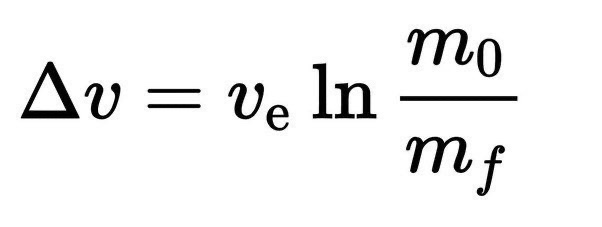
It's an exponential exercise in diminishing returns. Engineers escaped this trap by inventing staging; a method of dropping spent rocket stages in flight so the remaining engine wasn't stuck towing dead metal. That piece of elegant engineering launched the Apollo Era, a period of time when space was treated like a pristine sanctuary reserved for pure science, high-minded exploration and state-sponsored geopolitical flexes.
Today's NewSpace Era has stripped away that romance.
Where engineers once spent a decade painstakingly hand-crafting a single satellite to last forever, we now mass produce CubeSats on an assembly line like IKEA furniture. Launch costs have plummeted 96% over the last six decades and are set to drop nearly as far again by 2040, turning the final frontier into a glorified industrial park.1
Space is no longer a science-fiction fantasy or a purely scientific pursuit, it is becoming a marketplace.
Dr Alessio Terzi, Bennett School of Public Policy, University of Cambridge.1
This cost collapse provides Silicon Valley with its ultimate spatial fix. As AI and cloud computing melt local power grids and spark outrage in Virginia's Data Centre Alley, tech giants are eager to outsource to Low Earth Orbit, effectively offloading their heaviest physical, environmental and resource ravenous infrastructure into the vacuum of space.2
Under David Harvey's theory of the spatial fix, capitalism survives by expanding outward to dodge its own environmental and economic limits. Except this time, capital isn't just migrating overseas, it's moving off planet.
The Solar Flux
Why look to space though? This is because terrestrial computing has hit a resource wall. On Earth, data centres act as industrial sponges, sucking up local energy and pumping millions of gallons of water through thirsty cooling towers just to process our digital footprint. Even a small facility gulps down as much water as a small town, and the AI boom has turned this appetite into a frenzy. The number of US data centres doubled from 2018 to 2021 and has doubled yet again, pushing municipal grids to their absolute breaking points. Meta's Hyperion complex in Louisiana will devour twice the electricity New Orleans uses on a peak day, while in Ireland, grid exhaustion has forced data centres to rely on polluting off-grid generators. This current trajectory is glaringly unsustainable.3
If the scale of this impending crisis seems abstract, no single data point captures AI data centre demand better than NVIDIA's revenue curve. The chipmaker's data centre revenue has multiplied 65x, jumping 68% in its last fiscal year alone. Industry forecasts from JLL project that the race for AI and Cloud dominance will push data centre capacity at a relentless 14% annual growth rate through 2030, by which point AI is projected to consume half of all computational workloads on Earth.4
Space has thus been quietly positioned as the ultimate thermodynamic refuge. The proposition is quite elegant: by operating in sun-synchronous orbits, CubeSat data centres unlock continuous 24/7 solar energy, completely shedding the need for heavy, lithium-dense battery banks or terrestrial utility contracts. Furthermore, deep space serves as an infinite, passive heat sink as deployable radiators can dump waste heat directly into space as infrared emissions, eliminating the millions of gallons of fresh water typically consumed by thirsty terrestrial cooling towers. Perhaps most crucially for Tech, this space migration sidesteps Earth's structural friction entirely: an off-grid architecture hovering conveniently beyond the reach of local zoning laws, grid bottlenecks and land restrictions.
And where there is a spatial fix, venture capital is never far behind. Redmond-based aerospace startup Starcloud (formerly Lumen Orbit) made history in November 2025 by catapulting an NVIDIA H100 GPU into low Earth Orbit, the first time such a GPU had reached orbit. Backed by a $170 million Series A funding round led by Benchmark and EQT Ventures, the company has vaulted to a $1.1 billion unicorn valuation on the promise of building orbital hyperscale server farms.5
Key figures: Series A funding: $170M · Starcloud's valuation: $1.1B · Total capital raised: $200M · Fastest unicorn in Y Combinator history, 17 months from demo day
NVIDIA itself is heavily underwriting this space migration through its Space Computing Initiative, adapting hardware like the Jetson Orin to process orbital telemetry autonomously. The ambition is as breathtaking as it is transparent: construct an off-world cloud architecture immune to Earth's power constraints and cooling crises.
NVIDIA Jetson Orin: A compact AI computer chip that processes data directly onboard satellites so they don't have to send raw files back to Earth.
There is just one obvious flaw in this whole plan. Unfortunately for venture capitalists, Low Earth Orbit is not an empty, frictionless void waiting to be conquered as it is governed by a much stricter set of rules: orbital mechanics, high-speed physics and sixty years of floating space junk.
A Kinetic Impact
As established, private capital is attempting an off-world expansion not for exploration but because Earth is running out of room. Yet this spatial fix runs headlong into a unique orbital hazard as low Earth Orbit is already an industrial graveyard. Since Sputnik, sixty years of spent booster stages, shattered satellites and abandoned hardware have accumulated into a swirling cloud of space debris. In this environment, where debris travels at roughly 17,000 miles per hour, even a stray paint fleck carries the kinetic energy of a hand grenade.
The bitter irony is that this impending crisis is actively being fed by spaceflight's greatest modern success, affordability. As launch costs have plummeted by 96%, the barrier to entry for orbit has collapsed, replacing meticulous, long-term satellite design with Silicon Valley's favourite philosophy, disposability. Mass-produced satellites, designed to last only a few short years before failing or being superseded, are routinely abandoned to drift among the wreckage. By deploying fragile, hyperscale data clusters into this self-defeating landfill, we are simply trading terrestrial grid failure for the Kessler Syndrome.
Kessler Syndrome: A catastrophic, cascading chain reaction of collisions that could render orbit unusable for generations.
Beyond the kinetic threat of flying shrapnel lies an equally chaotic legal minefield. The 1967 Outer Space Treaty and the 1972 Liability Convention were forged in the shadow of Cold War panic after the US detonated 'Starfish Prime' in 1962, a high-altitude nuclear blast above the Pacific whose artificial radiation belt went on to damage or destroy roughly a third of the satellites then in low Earth Orbit.6
But frameworks designed to stop nuclear superpowers from irradiating the stratosphere are woefully unequipped to police Silicon Valley. Today, binding space law has eroded into a flimsy patchwork of voluntary guidelines and national mandates like the Artemis Accords or the FCC's recent five year de-orbit rule. As private corporations launch orbital cloud constellations alongside sovereign assets like Europe's Galileo satellite network, thorny questions of data sovereignty emerge.
When information is processed 400km above the Earth, who legally owns and protects it? In treating space as an off-grid processing plant, we have stepped into a legal grey zone where terrestrial data protection laws simply cease to function.
The legal patchwork.
Outer Space Treaty (1967): Establishes that space is free for all nations to explore and cannot be claimed or militarised.
Liability Convention (1972): Holds countries legally liable if space objects cause damage to others.
Artemis Accords (2020): US-led, non-binding international guidelines for civil space exploration.
FCC five-year de-orbit rule (2022): Satellite operators should safely de-orbit dead satellites within five years of mission end.
Galileo: The EU's civilian-run global satellite navigation network.
Compounding this legal ambiguity is the far more visceral threat of the weaponisation of orbit via kinetic kill vehicles. While 155 nations backed a non-binding UN resolution calling for a halt to destructive missile tests, major powers continue to treat Low Earth Orbit as a future battlefield and are actively testing missiles designed to destroy rival satellites simply by ramming into them at high speed. Because space has no borders, military spy satellites share the same crowded highways as commercial cloud servers. A single missile strike wouldn't just take out a military target but it would trigger a massive storm of flying shrapnel that could easily shred private data centres too. Hence, the cloud's critical infrastructure is in the middle of a military firing line.7
This orbital chaos makes one thing clear: moving servers to space doesn't escape our present conflicts.
There is, in short, no 'spatial fix' that can contain the contradictions of capitalism in the long run.
David Harvey, Distinguished Professor of Anthropology and Geography, CUNY Graduate Center.8
Harvey's warning cuts through the central delusion of the NewSpace Era, the belief that capital can outrun its own waste if it just moves fast enough. For half a century, we imagined the cloud as something weightless and clean. The reality is sixty years of spent boosters, abandoned satellites and disposable AI clusters hurtling through the dark at 17,000 mph.
Footnotes
-
University of Cambridge, "Space cargo costs could fall more than 90% by 2040" (opens in a new tab), July 14, 2026, reporting Terzi and Nicoli, PNAS Nexus 2
-
TechRadar, "Virginia county tells schools, businesses to 'conserve electricity' as AI data center demand hits grid, raises energy prices" (opens in a new tab), July 2, 2026
-
Lincoln Institute of Land Policy, "Data Drain: The Land and Water Impacts of the AI Boom" (opens in a new tab), Land Lines, October 17, 2025; Jordan Blum, "Meta is sinking $10 billion into rural Louisiana to build the home of its wildest AI aspirations, setting the template for the nation’s grid buildout" (opens in a new tab), Fortune, August 24, 2025
-
Technology Checker, "Data Center Market Statistics 2026: AI, $416B Market & the Power Ceiling" (opens in a new tab), June 12, 2026
-
TechCrunch, "Starcloud raises $170 million Series A to build data centers in space" (opens in a new tab), March 30, 2026
-
Scientific American, "What Happens if a Nuclear Weapon Goes Off in Space?" (opens in a new tab), June 13, 2024
-
Financial Times, "Russian spy spacecraft have intercepted Europe’s key satellites, officials believe" (opens in a new tab), February 4, 2026; Jeff Foust, "United Nations General Assembly approves ASAT test ban resolution" (opens in a new tab), SpaceNews, December 8, 2022
-
David Harvey, The Limits to Capital, chapter 13, "Crisis in the Space Economy of Capitalism", Verso, 2006 edition, p. 442