Why Did Nobody Notice?
Why economists failed to foresee the 2008 financial crisis and whether alternative models can help identify risks in the economy.
11 min read
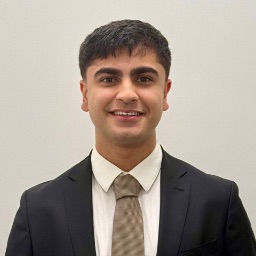
Co-founder & Vice President
LSE BSc Economics
I am a Co-Founder of The London Review and its Head of Economics. My goal is to make it the best place for students to develop original arguments and defend them to an exceptionally high standard.
I lead a team of 20 researchers from leading UK universities, covering economics and private markets. I run the editorial process from start to finish, commissioning ideas, challenging contributors' thinking, and editing every piece until it meets the standard I set. The result is student work that holds its own against the professional press.
Alongside leading the team, I write my own analysis on markets, monetary policy, and emerging economies, always focused on saying something new rather than reiterating the headlines. I am a BSc Economics student at the London School of Economics, and I have interned at Nomura across its Global Markets and Investment Banking divisions. My earlier work as an emerging markets analyst shaped the fundamental, data-led approach I bring to everything I publish.
Beyond what we publish, I care just as much about opening doors for the students coming up behind me. Through our mentorship scheme, I help sixth form students show genuine intellectual interest by writing articles and building a portfolio in a field they care about, giving them a real edge in their university applications.
Why economists failed to foresee the 2008 financial crisis and whether alternative models can help identify risks in the economy.
Mahnika Sadasivuni with Rohan Talwar11 min read
As global passive ETF assets under management approach $24 trillion, billions in savings are rushing into index-tracking fund for a sense of diversification, and the market structure is being changed dramatically. From the loss of active price discovery in market to creating the passive feedback loops for investor, the loss of active arbitrageurs in market is creating an enormous concentration risk for investors.
Cyrus Cheng with Rohan Talwar9 min read
As 16% of global investable assets are expected to be tokenised in 2035, the question of what settlement asset to use for digital finance raise. From "atomic settlement" to challenging the status of SWIFT, Central Bank Digital Currencies(CBDCs)seems to be the most ideal currency for the future. If so then how should central banks of developed countries should change their policies to adopt this new landscape?
Cyrus Cheng with Rohan Talwar8 min read
South Africa's six-quarter growth streak just got broken by a trade drag. Weeks after the quarter closed, the port meant to fix that blockage fell over
Raghu Kohli with Rohan Talwar6 min read
Digitisation transforms economies but its success ultimately depends on governing institutions. From India's UPI and Estonia's e-government to Britain's digital ID debate and China's surveillance infrastructure, which institutions are strong enough to keep it in check?
Ahana Bhattacharya with Rohan Talwar6 min read
Chile has taken majority control of its lithium and investors have stayed. Peru has kept a market-friendly framework and watched output stall. What capital is pricing is not ideology but whether a government can bind its successors
Raghu Kohli with Rohan Talwar7 min read
Britain's industrial strategy promises to bring factories back, and the investment commitments are real. But a modern plant employs a fraction of the workers an old one did, and the political case for manufacturing still rests on job numbers the technology no longer produces.
Ahana Bhattacharya with Rohan Talwar8 min read
Nigeria's currency, reserves and growth are stronger than they have been in years, but poverty and inflation numbers show the recovery has not yet reached most households.
Raghu Kohli with Rohan Talwar6 min read
Germany has abandoned the borrowing rules that defined it, and the euro zone is heading for record bond supply just as the ECB stops buying and starts tightening. Yields are climbing accordingly. The question is no longer whether Europe can borrow, but whether what it buys with the money is worth what the money now costs.
Ahana Bhattacharya with Rohan Talwar8 min read
Payroll shocks and tame inflation managed to undo a month of Fed hawkishness. The economy just got worse, but Wall Street just got happier.
Raghu Kohli with Rohan Talwar8 min read
Private Credit is one of the most rapidly expanding industries within private markets, with the Bank of England estimating a four-fold rise from 2015 to 2024. With the pressure of increased competition and potential reductions in interest rates, there is increased uncertainty around the future of the booming industry.
Anushka Mukherjee with Rohan Talwar8 min read
Why the bond market may have become America’s biggest macroeconomic problem
Ahana Bhattacharya with Rohan Talwar9 min read
Offshore law firms have already sold stakes to private equity. US Big Law is watching, waiting for someone else to go first. The legal industry's long immunity to outside capital is ending, but the terms remain deeply uncertain.
Alexander Eklund with Rohan Talwar11 min read
Semiconductor stocks have recently fallen despite resilient commercial demand, raising questions about whether the selloff is a temporary correction or an early warning of a broader economic slowdown.
Meghana Sivapuram with Rohan Talwar7 min read
Drought on the Danube has forced nuclear plants in Hungary and Romania to cut output. Chernobyl and Fukushima show why the economic damage from a disaster travels far beyond the site, through budgets, supply chains and expectations, and why it lasts.
Ahana Bhattacharya with Rohan Talwar13 min read
Big tech is on track to spend up to $690 billion on AI infrastructure this year alone. History suggests the technology can still win even as many of today's financiers lose everything.
Matthew Mahrous with Rohan Talwar8 min read
The won went from one of Asia's worst-performing currencies to one of the world's best in a matter of weeks, as chipmakers' overseas earnings came home, foreign equity selling eased, and the Bank of Korea ended a three-year rate freeze.
Sonal Weerasekera with Rohan Talwar8 min read
For decades China was constrained by what it could produce. It is now constrained by what its households will buy, and the surplus it exports instead is reshaping trade policy across the world.
Ahana Bhattacharya with Rohan Talwar7 min read
AI data centres promise growth, but infrastructure constraints are creating political and economic resistance.
Meghana Sivapuram with Rohan Talwar7 min read
The retail push looked like growth. It was really the industry building a capital base that does not depend on selling anything.
Abir Ghosh Biswas with Rohan Talwar7 min read
Three of nine voted to raise Bank Rate. The Bank's own Report then said the market curve is steeper than policy needs to be, and that most of its slope is not a rate expectation.
Rohan Talwar14 min read
Silicon Valley wants to escape the power grids, water shortages and zoning laws throttling its data centres by launching them into orbit. But Low Earth Orbit is no frictionless void, and moving servers to space may just trade one crisis for another.
Manasvi Kommuri with Rohan Talwar9 min read
Repeated heatwaves are no longer a seasonal inconvenience for Europe's economies. From lost labour productivity to rising food prices and multi-billion-euro damage bills, extreme heat is emerging as a structural drag on growth across the continent.
Sonal Weerasekera with Rohan Talwar8 min read
Algorithmic feeds have quietly become a dominant force in setting asset prices and mobilising political movements, from GameStop to India's Cockroach Janata Party, while regulators still lack the tools to measure how virality converts into capital and power.
Ahana Bhattacharya with Rohan Talwar8 min read
AI capital expenditure has emerged as the last major engine of global demand, propping up growth even as trade wars fragment the world economy. Whether that engine can keep pace with its scale and financing is the open question.
Daya Kaur Kalher with Rohan Talwar6 min read
A jury found Live Nation and Ticketmaster liable for illegal monopolisation in April 2026. The case is a study in how vertical integration converts dominance in one business into control over an entire industry.
Jay Patel with Rohan Talwar8 min read
Machine learning can spot economic shifts weeks before official statistics catch up, but its black-box reasoning means the most reliable forecasts still come from economists working alongside AI, not being replaced by it.
Meghana Sivapuram with Rohan Talwar5 min read
New Fed chair Kevin Warsh was expected to bring a dovish, rate-cutting sensibility to the central bank. Instead, his first meeting delivered the most hawkish surprise markets have seen in years, with traders now pricing in the Fed's first hike since 2023.
Sonal Weerasekera with Rohan Talwar7 min read
With the old black box monopolies breaking apart, private capital has emerged to underwrite the next era of European warfare.
Manasvi Kommuri with Rohan Talwar8 min read
Argentina's disinflation looks like a policy triumph on paper, but the currency framework enabling it may be quietly rebuilding the fragility it was designed to end.
Daya Kaur Kalher with Rohan Talwar5 min read
China's factories are shipping more than they have in years, driven by an AI-fuelled tech boom. Yet second-quarter growth still slowed to 4.3%, its weakest in decades outside the pandemic, a reminder that strong exports don't always mean a strong economy.
Raghu Kohli with Rohan Talwar and Jack Childs6 min read
Global PE fundraising is rising but the number of funds closing is collapsing. The industry is not recovering. It is concentrating, and the zombie firm data suggests the structural shift is already irreversible for much of the market.
Alexander Eklund with Rohan Talwar7 min read
South Korea's shipping cartel ran for 15 years across three major trade routes. The case is a textbook study in how cartels form, how they enforce discipline, and why concentrated industries make collusion so hard to prevent.
Jay Patel with Rohan Talwar9 min read
Apollo has gatecrashed Castlelake's hard-won takeover of easyJet with a higher offer backed by the airline's board, setting up a bidding war over one of Europe's best-known low-cost carriers just months after a bruising first half of the year.
Sonal Weerasekera with Rohan Talwar7 min read
The Iran war sent oil prices soaring and hit every major economy at once, yet the Fed, the Bank of England, and the European Central Bank all responded differently. The divergence turned not on the shock itself but on each bank's headroom, growth outlook, and framework for interpreting supply-driven inflation.
Kaveesha Maddala with Rohan Talwar4 min read
The Bank of Japan has raised its policy rate five times since 2024, yet the yen just hit a forty year low. Here is what two years of tightening have actually changed, and what is likely to happen next.
Rohan Talwar13 min read
From preferred equity deals for LP stakes to carried interest loans for executives, private equity is manufacturing liquidity at every level of the food chain. The exit market remains blocked. The workarounds are getting bigger.
Alexander Eklund with Rohan Talwar7 min read
Pimco, the $2.3tn bond giant built on public markets, is quietly becoming one of the most powerful actors in private credit with mega-deals for Meta and Oracle, lending to Gulf states in wartime, and exploiting the liquidity crunch hitting rival funds.
Sonal Weerasekera with Rohan Talwar10 min read
The DOJ says criminal charges are now on the table for firms that use algorithms to coordinate prices. The question at the heart of the case is whether software can produce cartel-like outcomes without anyone picking up a phone.
Jay Patel with Rohan Talwar and Jack Childs10 min read
Five years after TDR Capital and the Issa brothers' £6.8bn leveraged buyout, Asda has posted a £989mn loss and seen its UK grocery market share fall to a record low. The question is whether the private equity playbook is compatible with running a thin-margin grocer in one of the world's most competitive retail markets.
Sonal Weerasekera with Jack Childs and Rohan Talwar8 min read
Novo Nordisk and Eli Lilly have proven GLP-1 drugs can deliver surgery-level weight loss - but with patients regaining much of it after stopping, the market's real value may depend on long-term adherence rather than who wins on efficacy.
Abdul Wasey Bhatti with Oscar McGuinness and Rohan Talwar5 min read
Thoma Bravo's $5bn Medallia loss and EQT's £10.7bn Intertek acquisition tell the same story from opposite ends. Private equity's software bet has failed. The platform strategy is what comes next.
Alexander Eklund with Rohan Talwar8 min read
The proposed takeover highlights how ownership of digital platforms is becoming just as important as ownership of the content itself.
Gaurav Bohra with Rohan Talwar7 min read
A federal court ruled Google's search dominance is illegal. The remedies are an attempt to dismantle a monopoly built on data, defaults, and self-reinforcing scale. Whether they can work is an open question.
Jay Patel with Jack Childs and Rohan Talwar9 min read
The new chairman of the world's most powerful central bank faces a problem his predecessor spent eight years navigating and never quite solved: inflation that won't obey. Only this time, the White House isn't demanding he fix it, it's cheering it on.
Raghu Kohli with Rohan Talwar7 min read
Apollo's co-president warned of a private equity reckoning at SuperReturn in Berlin, then withdrew a £1.5bn bid for Bodycote two days later. The contradiction tells you everything about where the industry stands.
Alexander Eklund with Rohan Talwar6 min read
As Bain and GHO rotate into Japan and healthcare, Astorg cannot raise a fund and JPMorgan quietly offloads NAV loan exposure. The private equity industry is not in a slowdown. It is in a shake-out.
Alexander Eklund with Rohan Talwar8 min read
As AI disruption freezes software heavy buyout funds and retail capital retreats, a handful of firms are moving decisively in the opposite direction. The private equity market is splitting into winners and losers in real time.
Alexander Eklund with Rohan Talwar8 min read
Disruptions in the Strait of Hormuz are exposing the fragility of global trade, raising the risk that decades of hyper-globalisation begin to fragment.
Matthew Mahrous with Rohan Talwar and Jack Childs6 min read
The Iran war handed the Bank of Japan a policy trap it cannot easily escape. Holding rates to avoid a growth shock is letting the yen slide toward levels that historically trigger intervention. Hiking to defend the currency risks making the growth shock worse.
Raghu Kohli with Rohan Talwar8 min read
The MPC meets on 30 April facing a textbook stagflationary bind. The evidence favours holding steady over a premature hike.
Rohan Talwar11 min read
Buyout activity fell 36 per cent in Q1 2026 as the Gulf conflict and AI disruption to software converge to freeze dealmaking across the private equity industry.
Alexander Eklund with Rohan Talwar5 min read
Jet fuel prices have doubled since February, but airlines face a microeconomic bind: raise fares too fast and passengers vanish, raise them too slowly and margins collapse.
Jay Patel with Rohan Talwar and Jack Childs7 min read
Oil prices are being driven by geopolitics, not fundamentals, raising doubts over whether this is real scarcity or just a temporary risk premium.
Matthew Mahrous with Rohan Talwar4 min read
Six central bank holds in 48 hours, Brent crude approaching $96, and a US-Iran military conflict have shattered the consensus rate narrative of early 2026, resetting the dollar, the yen, and the entire FX outlook.
Raghu Kohli with Jack Childs and Rohan Talwar6 min read
Retail investors are pulling billions, insiders say defaults are already here, and banks are quietly tightening credit. The mixed signals across private credit mask a single uncomfortable truth.
Alexander Eklund with Rohan Talwar, Oscar McGuinness and Jack Childs7 min read
Partners Group Chair Steffen Meister warns AI will create an asymmetric disaster for private credit, where lenders absorb the losses from disrupted companies while capturing none of the upside.
Rohan Talwar6 min read
Investors pulled $3.7 billion from the world's largest private credit fund. BCRED has posted its first ever net outflows, signalling a turning point for the entire industry.
Rohan Talwar5 min read
Blue Owl permanently restricts investors from withdrawing cash from its inaugural retail debt fund, backtracking on plans to reopen redemptions this quarter.
Oscar McGuinness with Rohan Talwar6 min read